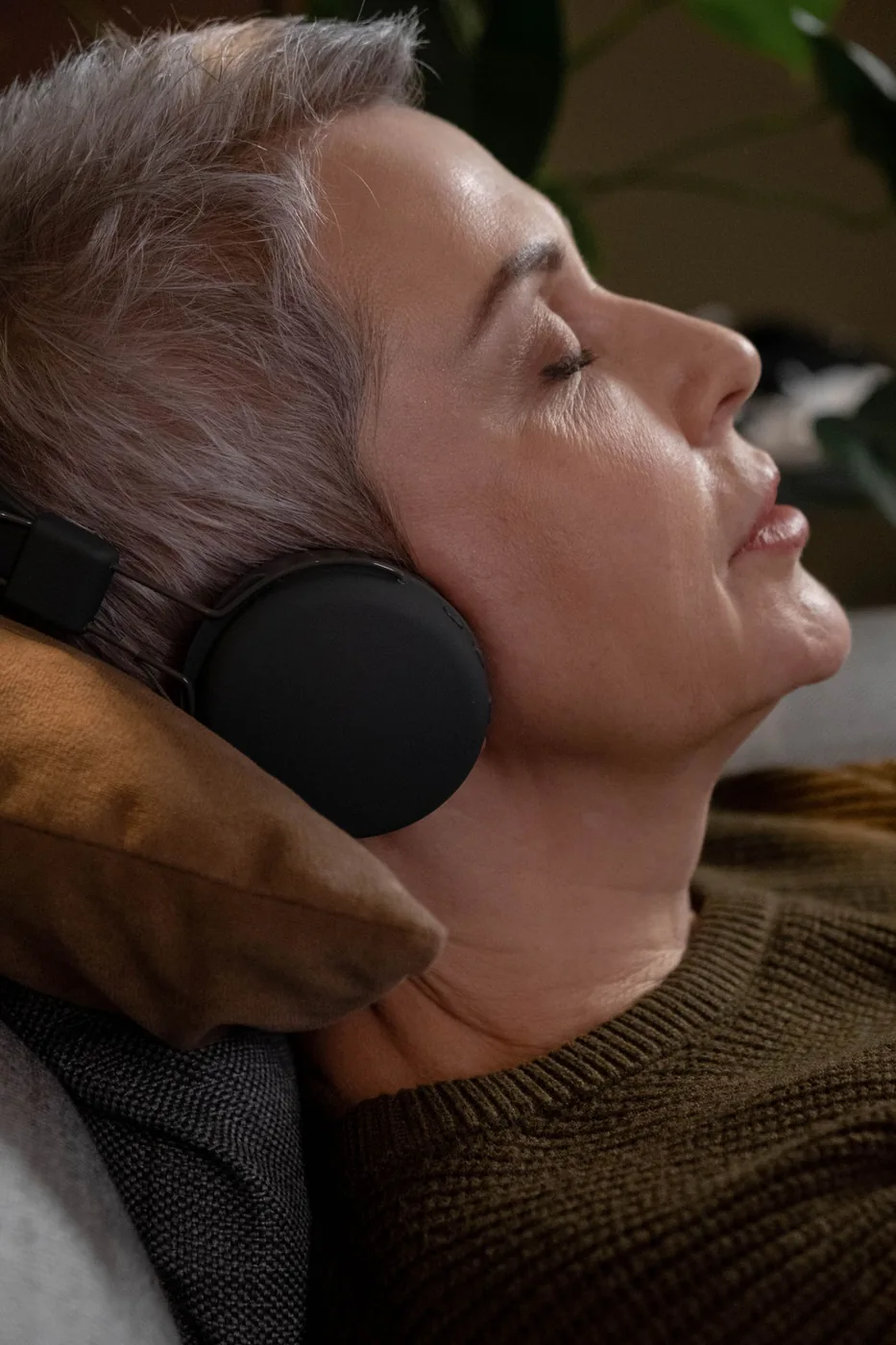
Choose them for the room you want to hear
Imagine folding laundry while listening to a podcast, with someone else moving around the apartment. You want the conversation in your ears without feeling disconnected from the room. That is a useful starting point for open-ear headphones. A crowded train is a different setting: the surrounding sound you wanted to preserve can compete with every sentence. Begin with the place and activity rather than the idea that one design is a universal upgrade. Open-ear listening is a format choice, and the benefits become clearer when you give it a specific job.
Open-ear describes more than one design
Shokz presents OpenRun Pro 2 as an open-ear sports headphone, while Sony describes LinkBuds Open with an open-ring design that does not provide traditional noise isolation. Those official descriptions show why the category should not be reduced to one shape or technology. Some products sit around the ears on a connected band; others are separate pieces. Compare how the design interacts with glasses, hats, hair, and earrings. A style that looks unobtrusive in a product photo can occupy the same space as something you already wear every day.
Let your main activity decide the fit
For household tasks, a lightweight design that stays comfortable while you turn your head may be enough. For a walking routine, controls you can find by touch may matter more than a long app-feature list. If you often lean against a high-backed chair, consider whether a band behind the head will touch it. If you tend to misplace small earbuds, a connected format may make storage easier. None of these choices proves that one product fits everyone. Use the return period to try the movements and accessories that belong to your routine.
Accept the limits before spending
An open path to outside sound is not the same thing as quiet. If you buy an open-ear design because sealed tips feel uncomfortable, accept that a loud environment may still make speech hard to follow. Do not plan to solve that mismatch by continually increasing volume. Consider whether you would be happier pausing audio on the noisy part of the day and resuming later. If most of your listening happens in a loud carriage or a busy gym, compare a different format. Paying more does not remove the basic tradeoff of letting the world remain audible.
Compare controls and connection habits
Check how you pause, skip, answer a call, and change volume on the exact product. A physical button can be useful when you do not want to locate a tiny touch zone, but personal preference still matters. If you use a phone and computer, read the model's device-switching guidance rather than assuming every Bluetooth product handles the pair identically. A simple charging routine may be more valuable than an ambitious maximum runtime claim. Put the charger or case where you finish the activity so the headphones are ready for the next walk or evening of chores.
Keep awareness claims in perspective
Hearing more of the environment can be a useful property, but no headphone format guarantees that you will notice a vehicle, alarm, or another person. Attention, volume, and circumstances still matter. Follow local rules and the equipment's usage guidance for the activity you choose. Pause playback when the situation becomes demanding. For indoor shared spaces, also consider whether another person can hear the audio at your chosen level. That is something to check politely in your own setting rather than infer from the word open or from a marketing promise about private sound.
Where the money is worth spending
Our first comparison is between a Shokz connected sports format and Sony LinkBuds Open's separate-earbud approach. Choose based on fit, storage, and the listening context you wrote down at the start. Do not pay extra for a product aimed at intense exercise if yours will live beside the laundry basket, unless its particular shape is what suits you. Equally, do not assume a casual-looking design is suitable for every workout or weather condition. Read the selected model's care guidance and current specifications. A good purchase leaves you with a clear answer to when you will use it.
Where to start looking
These are starting points for comparison, based on manufacturers’ published information. Check the exact version, compatibility, current availability, price, and return terms before ordering. Manufacturer links below are ordinary links unless specifically labeled as affiliate.
Shokz OpenRun Pro 2
Consider a connected open-ear format for an activity-focused routine.
The tradeoff: Check fit with glasses, headwear, and any chair or collar that may touch the band.
Manufacturer details ↗Sony LinkBuds Open
Compare when separate open-ring earbuds suit your storage and wearing preferences.
The tradeoff: The open design does not provide traditional noise isolation.
Manufacturer details ↗A few things you might be wondering
Are open-ear headphones noise canceling?+
Do not assume so. Open designs intentionally preserve a path for outside sound; check the specific product's description.
Are they automatically safer outdoors?+
No headphone guarantees awareness. Volume, attention, local rules, and the situation still matter; pause playback when needed.
Sources & editorial notes
Manufacturer and primary-source information checked October 23, 2026. Buying advice reflects our editorial interpretation. Features and regional options can change.
See our editorial policy or request a correction.