Start with tomorrow's bag
Imagine a workday that ends with a train ride to a friend's apartment. Your phone handles directions, tickets, and messages; your laptop comes out for an hour before dinner. A charger for this day needs to serve both devices without becoming another heavy object you resent carrying. Write down the exact phone and laptop models, then find each manufacturer's charging guidance. That short inventory is more useful than starting with the largest wattage printed on a box. If you never charge a laptop away from home, a phone-sized adapter may be all the charger you need.
Read the port-by-port promise
A multiport charger can advertise a generous total while offering less from an individual port when everything is connected. Read the output table for your intended combination: laptop plus phone, two phones, or laptop alone. The useful question is whether the laptop still gets the power it needs while the phone is attached. Apple notes that iPhone fast charging depends on compatible equipment, including USB Power Delivery for comparable third-party adapters. USB-IF describes Power Delivery as a standard with several power capabilities. Neither statement means that every USB-C socket supplies every charging mode.
Choose one of three sensible paths
For a phone-only commute, favor a compact, reputable single-port adapter and a cable long enough for awkward outlets. For a laptop-and-phone day, compare a two-port model with a clear power-sharing chart. For a household where devices charge overnight in different rooms, several modest adapters may be more practical than one impressive hub. These are shopping paths rather than speed rankings. A charger that saves ten seconds of packing every morning can be a better purchase than one with an extra port that stays unused. Check the current manufacturer listing before choosing the exact model.
Make the cable part of the purchase
A charger is only half the connection. Confirm both ends of the cable and its stated power capability, especially if the same cable will serve a laptop. Keep one cable permanently in the travel pouch if you repeatedly forget the bedside cable. Measure a realistic route from an outlet to a table before choosing length. An extremely short cable can leave a phone hanging beside a socket; an unnecessarily long one can tangle with a water bottle. A second affordable cable that solves that problem often brings more value than moving up to a premium adapter tier.
Spend on the inconvenient moment
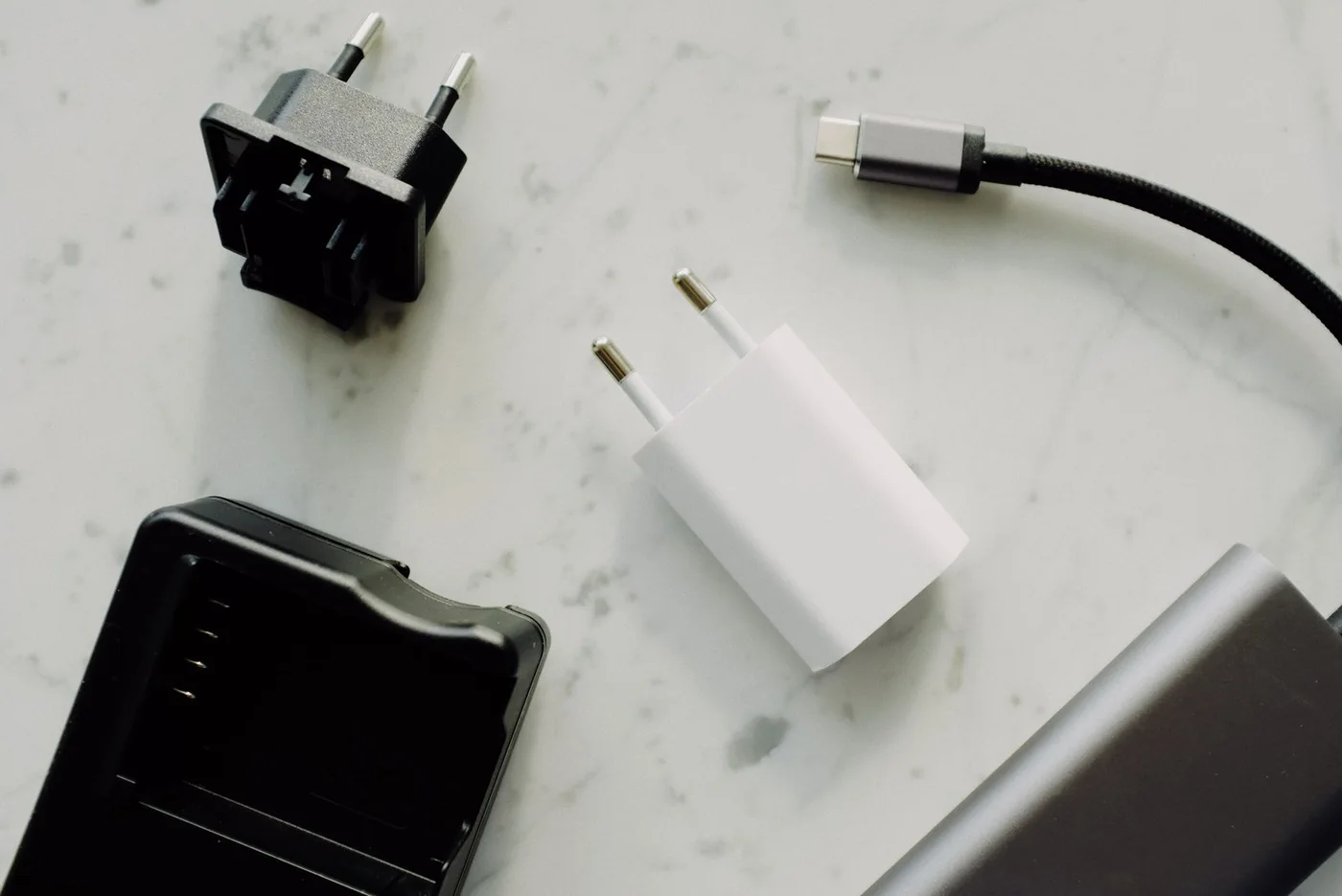
Picture the outlet behind a hotel nightstand or below a meeting-room table. Adapter shape, plug orientation, and cable clearance determine whether you can actually use it there. Compare dimensions instead of relying on dramatic close-up product photos. Folding prongs can suit a bag, while a separate extension cord may suit a fixed desk better. Do not assume a travel adapter changes voltage; read the charger's input label and the destination's socket requirements separately. For travel within your usual country, avoid buying a complicated international kit simply because the product page presents it as an upgrade.
A quick arrival-day check
When the charger arrives, connect the device you care about most first. Then add the second device and confirm that both indicate charging. A brief renegotiation when another cable is plugged in can occur with some designs; assess whether the actual behavior disrupts your routine. Keep packaging and order details until you have tried the setup during an ordinary workday. If your laptop warns about a low-power supply, revisit the port allocation rather than blaming the cable at random. Stop using equipment with visible damage, loose plugs, or other signs described as unsafe in its instructions.
Our buying direction
Apple's own adapters are a useful reference for a straightforward Apple-device setup; compare an appropriately specified Anker multiport charger when carrying several devices. Neither route justifies buying more output than your devices and schedule can use. Put a hard ceiling on your total basket, including cables and any travel plug adapter, before opening sale pages. If a working charger already meets those needs, keep it at your home base and buy only what fills the mobile gap. This guide uses published guidance and scenario-based judgment; it does not claim measured charging results from the products linked below.
Where to start looking
These are starting points for comparison, based on manufacturers’ published information. Check the exact version, compatibility, current availability, price, and return terms before ordering. Manufacturer links below are ordinary links unless specifically labeled as affiliate.
Apple USB power adapters
A clear manufacturer reference for matching an Apple device with an appropriate adapter.
The tradeoff: A simple adapter may offer fewer ports than a shared travel setup needs.
Manufacturer details ↗Anker chargers
Compare current multiport options when one travel charger must serve several devices.
The tradeoff: Read the selected model's simultaneous-output table before purchase.
Manufacturer details ↗A few things you might be wondering
Will a higher-wattage charger force extra power into my phone?+
Choose compatible, standards-compliant equipment. The charger's maximum rating alone does not determine what a particular phone receives; follow the device maker's guidance.
Should every device have its own charger?+
Not necessarily. A shared charger suits a bag, while separate charging locations can be more convenient at home. Buy around the locations you actually use.
Sources & editorial notes
Manufacturer and primary-source information checked October 23, 2026. Buying advice reflects our editorial interpretation. Features and regional options can change.
See our editorial policy or request a correction.